SurgTech is the annual event for innovators, clinicians, academia and communities to connect and shape the future of healthcare. This is where world-class surgical technologies are guided by visionary policy leadership, cutting-edge industry solutions and patient voices.
NIHR is the health and social care research arm of the nation, driving life-changing research. SurgTech 2026 brings together the breadth of the UK’s surgical and perioperative research excellence, showcasing how the most revolutionary technologies are transforming care before, during and after surgery.
The two-day programme promises a host of prestigious speakers, interactive panel discussions, educational breakout sessions and industry show cases.
The event is hosted by a collaboration between the Leeds NIHR HealthTech Research Centre and the NIHR Translational Research Collaboration in Surgery and Perioperative Care (SPOC-TRC), supported by Health Innovation Leeds.
Confirmed Speakers include:
- Lawrence Tallon, Chief Executive of Medicines & Healthcare Products Regulatory Agency MHRA
- Professor Michael Lewis, NIHR Life Scientific Industry Director
- Professor Jonathan Benger, Chief Executive NICE
- Mark Slack, Chief Medical Officer CMR
Why Attend
- Hear how inspiring surgical technologies are making tomorrow’s healthcare possible, today.
- Make connections between ideas, science, public and industry to solve real-world challenges.
- Forge the tight partnership across national networks to take innovation to the next level.
Date
Date: 8th & 9th October 2026
Venue: Headingley Stadium, St Michael’s Lane, Headingley, Leeds LS6 3BR
Register Here
Agenda
Coming Soon
 Professor Michael Lewis, Scientific Director for Innovation NIHR Programme Director SBRI Healthcare & i4i University of Birmingham Medical School
Professor Michael Lewis, is Scientific Director for the NIHR, and recently i4i and SBRi Healthcare programmes as well as Professor of Life Science Innovation at the University of Birmingham.
His industry experience covers pharma, biotech, digital, dental, devices, clinical trials and diagnostics. Currently, he is Chair of 2 life science companies all with an emphasis on citizen focused, data and outcomes driven healthcare. He recently sat on the Board of SNOMED, the global medical coding standardisation system, the Executive Board of Birmingham Health Partners and is an advisor on data, AI, quantum, genomics and engineered biology.
He lectures on innovation in life sciences and how this aligns with the United Nations 17 Sustainable Development goals. He is also closely involved with delivering the new Birmingham Health Innovation campus, a £250m life science park at the University of Birmingham.
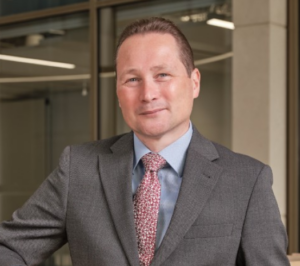 Professor Nick Plant, Deputy Vice-Chancellor: Research & Innovation, University of Leeds
Professor Nick Plant leads on the development of the University’s research and innovation strategy, creating a research culture and environment which delivers high quality research and impact for the region and beyond.
His brief includes promoting partnerships in a number of key sectors, accelerating collaboration across a wide range of academic disciplines and driving recruitment of world-leading academics.
Professor Plant came to Leeds as Dean of Research Quality and Impact in 2017, leading on the development and enhancement of the University’s research profile. This included leading the implementation of an institutional-wide quality and impact delivery plan and preparations for the 2021 Research Excellence Framework, the system for assessing research quality in UK higher education institutions, as well as ensuring the University continues to invest in its greatest asset: its staff.
Before joining the University, he was an Associate Professor in Systems Biology at the University of Surrey. He is a science graduate of the University of Nottingham.
Lawrence Tallon, Chief Executive of Medicines & Healthcare Products Regulatory Agency MHRA
 Professor Darren Treanor, Consultant Pathologist, Honorary Clinical Professor, Leeds Teaching Hospital NHS Trust
Prof. Darren Treanor MB BSc (Computing) MD PhD is a consultant pathologist at Leeds Teaching Hospitals NHS Trust, honorary professor of pathology at the University of Leeds, adjunct professor in digital pathology at Linköping University, Sweden and Digital Pathology Lead for the UK Royal College of Pathologists. He is a clinical director of the UKRI Centre for Doctoral Training in Artificial Intelligence in Healthcare at the University of Leeds and Director of the UK National Pathology Imaging Co-operative.
Dual qualified in medicine and computing, Dr. Treanor runs the Leeds virtual pathology project, with a multi-disciplinary team working in digital pathology research and innovation. He has co-authored over 180 papers in the medical and computing literature, most of them concerned with the application or development of digital pathology in clinical and preclinical areas.
He is director of the National Pathology Imaging Co-operative, a £100m Industry-Academia-NHS collaboration to deploy digital pathology across more than 20 labs, and across two national networks to support sarcoma/bone and paediatric tumour diagnosis. NPIC will use this infrastructure to develop and test artificial intelligence systems to diagnose cancer, covering the whole AI lifecycle from development through evaluation to deployment.
At Linköping his research includes the clinical adoption and validation of digital pathology in a fully digitised department, and the development and implementation of AI.
Other research activities include 3D tissue reconstruction, image analysis, colour measurement/ correction and the use of digital pathology in education and training.
Further details are available at http://www.virtualpathology.leeds.ac.uk and https://npic.ac.uk
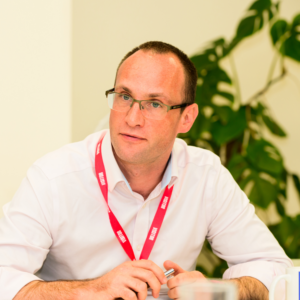 Philip White, Founder & Managing Director, Audacia
Philip White is founder and managing director of Audacia, a technology consultancy specialising in data, AI and software engineering, delivering transformational change and technology programmes for major public and private sector organisations.
Philip has spent much of his career working on large-scale enterprise technology, initially in senior software engineering roles specialising in trading and risk management, before founding Audacia.
Founded in 2007, Audacia’s work in healthcare and life sciences includes machine learning to optimise sterilisation processes for STERIS, generative AI to support complex regulatory enquiries for the MHRA, and digital and AI platforms for the NIHR supporting the funding and dissemination of health and care research.
 Professor Muthu Ramachandran, Principal Consultant, Forti5 Technologies Ltd
Professor Muthu Ramachandran is currently a Cybersecurity, AI, and Blockchain Technology & Research Consultant at Forti5 Technologies, UK and a Visiting Professor Extraordinarius at University of South Africa (UniSA) and at Lincoln University College, Malaysia. Muthu is certified assessor for IASME CE (Information Assurance for Small and Medium Enterprises Cyber Essentials Certification Assessor), CE assurance, IoT Cyber, and IoT Assurance.
Muthu is also an Editorial Board member and Corporate Advisor Council Lead on AI Ethics in Healthcare at Blockchain in Healthcare Today (BHTY, USA) and Editor-in-Chief (EiC) at International Journal of Organizational and Collective Intelligence (IJOCI). Muthu has been recognized as one of the Top Blockchain Voices by LinkedIn. He has 35+ years of experience in teaching & research in both academia and in industrial settings. Muthu is also the author of recent books on Blockchain Engineering in Healthcare (Springer, 2025), Engineering AI Ethics by Design (Springer, 2025), Ethics of Blockchain by Design (Elsevier, 2026), AI for Cybersecurity Vol 1 and Vol 2 (Springer 2026), and has authored and edited more than 15 books (amazon.com/author/muthu) and publications at https://tinyurl.com/muthu-pub.
Muthu organised a first international conference on AI and Blockchain in Healthcare (ABH 2026) held in Porto, Portugal on 19-20th July 2026, https://abh.scitevents.org/?y=2026
Dr Rosie Britton, Innovation Policy Manager, MedTech & Innovation Directorate, DHSC
Mark Slack, Co-Founder & Chief Medical Officer CMR Surgical
 Professor David Beard Professor of Musculoskeletal & Surgical Sciences, University of Oxford
David Beard is an internationally recognised expert in the evaluation of surgical innovation, holding roles as Professor of Musculoskeletal and Surgical Sciences and Rosetrees RCS Eng Oxford (Surgical Trials Centre) Chair, at the University of Oxford, and Professor and Director of Research Partnerships at the NHMRC Clinical Trials Centre, University of Sydney, with a specialist role as Surgical & Complex Intervention Trials Lead.
Professor Beard has been instrumental in the development and leadership of the IDEAL collaboration, providing an internationally adopted framework for new devices and surgical testing. His current research portfolio includes leadership of several major national and international studies. He is Co-Chief Investigator of the NIHR REINFORCE study, a large-scale evaluation of the safety, effectiveness, implementation and health economics of robotic surgery across multiple specialties, and a co-applicant on PASHiOn, a multicentre trial of personalised, digitally planned knee surgery. Most recently, he secured an $11 million MRFF Frontiers grant (PIONEERS), and will lead the embedded clinical trials program.
He is also a member of the RCS Eng Working Group on Robotic Surgery (RADAR) and the MSK RAS working group and serves as TSC Chair of the NIHR RACER study.
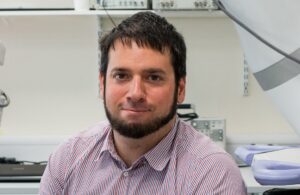 Dr Bruno Scaglioni, R & D Director, Atlas Endoscopy Limited
Bruno Scaglioni is R&D Director at Atlas Endoscopy, a Leeds-based medical device company developing the REN robotic endoscopy platform. He leads the company’s research and development activities, from system engineering and manufacturing through to the application of AI in robotic endoscopy.
Bruno holds a Ph.D. from Politecnico di Milano and spent several years as a postdoctoral researcher in the School of Electronic and Electrical Engineering at the University of Leeds, where his work focused on medical robotics. Originally from Italy, he has been based in the UK since 2017
 Professor Jonathan Benger, Chief Executive, NICE
Jonathan joined NICE in January 2023 as Chief Medical Officer and in March 2023 became Interim Director of the Centre for Guidelines. Jonathan was subsequently appointed Deputy Chief Executive in May 2024 and Chief Executive in December 2025.
Prior to this, he was the Interim Chief Clinical Information Officer (CCIO) at NHS England (2022), the Chief Medical Officer (CMO) of NHS Digital (2019 to 2022), and the National Clinical Director for Urgent and Emergency Care at NHS England (2013 to 2019).
In his clinical work, Jonathan is a consultant in emergency medicine at the Bristol Royal Infirmary and also does regular shifts with the Great Western Air Ambulance, which he established as its first medical advisor between 2007 and 2011.
Jonathan is professor of emergency care in the school of health and social wellbeing at the University of the West of England, and a National Institute for Health Research (NIHR) senior investigator. His main research interests relate to cardiac arrest, emergency and pre-hospital care, service organization and delivery, and design research.
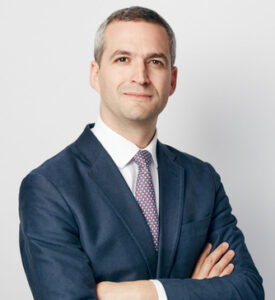 Mr James Kinross, Consultant colorectal surgeon at Imperial College London
James Kinross is a consultant colorectal surgeon and Associate Professor of Surgery at Imperial College London, where he leads a translational research group working at the intersection of surgery, data and artificial intelligence. He is Head of Colorectal Surgery at Imperial College Healthcare NHS Trust and chairs the ACPGBI Artificial Intelligence Task Force, the first national body to set standards for AI adoption in colorectal surgery across the UK and Ireland.
His work is concerned with making the operating theatre computable. He co-authored the international Delphi consensus defining digital surgery (npj Digital Medicine), and his team published the first-in-human demonstration of robotic surgery with real-time intraoperative mass spectrometry. He currently collaborates across several clinical translational programmes, including ROBOGAST (EPSRC) the OASIS Hub for optical and acoustic surgical imaging and ARIA-funded autonomous colonoscopy capsules. He has co-founded three clinical technology companies, including The Evidence Company, an AI spinout for autonomous evidence synthesis, and holds two US patents. He is the author of Dark Matter (Penguin, 2023).
 Dr Mike Odling-Smee, Founding CEO, Aire Innovate
Dr Mike Odling-Smee has led system architecture in the NHS for more than 20 years. He has been the lead integration architect or advisor on a range of pivotal national programmes including spine, the Interoperability Toolkit and GP connect.
He founded Aire Logic with Joe Waller in 2007, to provide systems build and integration services to the NHS, adopting an agile approach. It’s now one of the largest providers to the NHS.
Informed by the challenges seen in the NHS, Mike and the team built a sister company, Aire Innovate, to deliver an open low-code platform that makes digital teams masters of their own destiny, equipped with easy-to-use foundation tools for building, connecting and changing IT systems, precisely to their needs.
This platform has been adopted by a range of NHS organisations, including Leeds Teaching Hospitals, Alder Hey Children’s Hospital, Manchester ICS and Guys and St Thomas’.
Before entering the world of NHS IT systems, Mike studied Astronomy and Astrophysics and has a PhD in Atomic and Molecular Physics.
Department of Health & Social Care – Speaker TBC
Dr Alwyn Kotze, Perioperative Lead, Leeds Teaching Hospital NHS Trust
 Dr Niall Keenan, Consultant Cardiologist and Divisional Director for Medicine
Dr Niall Keenan is a Cardiologist and Divisional Director for Medicine at West Herts Teaching Hospitals NHS Trust. West Herts was an early adopter of Virtual Ward approaches to patient care with one of the most advanced services in the country and have used this to support elective recovery including in Colorectal Surgery. Dr Keenan has been Clinical Lead of the Virtual Ward programme and oversees it in his current role. He led the NHS England East of England group on Virtual Wards and was a member of the National Virtual Wards Steering Committee. He was appointed OBE for services to the NHS in 2026.
Day 1 11:30 – 12:30
1st in the UK Womb Transplantation: Challenges and the Role of Qualitative Research – SPOC TRC
New Technologies for Computer/Robot Assisted Surgery – CRAS
The MediPath Innovation Roadmap™
MedTech Innovation Without the Guesswork
De-risking Development • Accelerating Commercialisation • Maximising Value
Dr Patrick Trotter, Head of Innovation & Commercialisation, Medilink North of England
MediPath Innovation Roadmap™ is Medilink’s seven-stage strategic planning framework that guides healthcare innovators from concept through to international commercialisation. The roadmap aligns technical, clinical, regulatory and commercial activities, helping organisations identify risks early, make informed decisions and establish a clear route to market. It supports innovators through strategy development, market and competitor assessment, concept generation, product positioning, product evaluation, clinical investigation, regulatory approval and reimbursement planning. By combining best-practice guidance with forecasting of costs, resources and timelines, MediPath enables the development of realistic, costed R&D and commercialisation plans. The framework helps organisations de-risk innovation, accelerate development and market adoption, improve investment readiness and maximise commercial value, transforming healthcare concepts into compliant, market-ready products and profitable businesses.
PBIAA Session – Exploring routes to market for medical devices
Keynote presentation from Dr Susan Partridge, Clinical Regulatory Lead at BSI
Case studies and panel involving a range of Yorkshire MedTech Proof of Concept projects progressing along the translational pathway and demonstrating different approaches to achieving commercial milestones.
Speakers include:
– Dr Rasha Rezk – University of York – The Microfluidic French Press: Safe Delivery of Gene Therapies
– Dr Elliott Smith – University of Leeds – Haemodynamic Estimation in Arteries with Transthoracic 4-Dimensional imaging (HEART-4D)
The Constellation of Success: Why Great MedTech Still Fails to Scale
Dr Amel Havkic, Managing Director of EvoMed Consulting, Justin Hall, MedTech Marketing Ltd, Michael Branagan-Harris, CEO HealthTech Strategies Limited, Michael Branagan-Harris, CEO HealthTech Strategies Limited and Matthais Winkler, Bouyancy Health Strategy.
Great science. Solid funding. Full regulatory compliance. And still — most MedTech ventures fail to scale.
Why? Because clinical excellence and commercial logic rarely get built together. They collide instead, usually somewhere between the lab and the boardroom.
Join this session to learn:
- Why “technically strong” and “well-funded” still isn’t enough
- The seven-point Constellation that separates ventures that scale from ventures that stall
- How to spot your own structural blind spots — before your investors, accelerator, or hospital partners do
Whether you’re building, funding, or accelerating the next generation of HealthTech, this is the session that shows you where your stars aren’t yet aligned.
Day 1 16:00 – 17:00
Developing Invasive Placebo Interventions – SPOC TRC
NIHR Net Zero Innovation Catalyst/ SUSTAIN – Professor Pete Culmer, Dr Rory Turnbull
Capacity & Building Training, MedTech Foundation
Digital Inclusion in HealthTech: Real-world Insights from Holbeck Together
Anna Anderson, Senior Research Fellow, University of Leeds, Liam Bishop Diversity and Inclusion Officer, University of Leeds and Sean Flannigan, Digital Inclusion Officer, Holbeck Together
Digital inclusion is vital to ensure HealthTech helps to reduce not increase health inequalities. In this interactive session, we’ll ask what the barriers to using HealthTech are, what impact barriers can have, and what actions we can take to address them. The session will be underpinned by real-world insights from communities; we’ll be supported Holbeck Together – a charity that provides digital access, advice and wider support to diverse communities in Holbeck. We’ll draw on the NHS inclusive digital healthcare framework to understand the wider context and use a series of exercises to apply insights to real-world practice. By considering the views of patients, communities, clinicians, tech developers and researchers, we’ll identify practical actions everyone can take to promote digital inclusion.
PBIAA Session – Securing funding for your spin-out or start-up: From Seed to Series B
Keynote presentation from Dr Andy Round, Investment Director at Deepbridge Capital
Speakers sharing insights and experiences of raising investment at different stages, including:
– PHAsT: Prof Ipsita Roy / Dr Andrea Mele – Angel Investment matched with Innovate UK Investor Partnership, totalling £1m for acceleration of innovation to commercial reality
Day 2 11:00 -12:00
Evaluation and Regulation of New Devices and Surgical Procedures – SPOC TRC
Prototype to Practice – can academics help super charge the route to adoption?
Professor Deborah Stocken, NIHR Research Professor, Deputy Director for Research and Neil Toner, Life Science Key Account Manager, Yorkshire and Humber Regional Research Delivery Network
In an ideal world, evidence generation would occur throughout the Medtech development pathway. In reality, methodology collaborations occur less in the early-stage developmental phase but can help provide rigorous evidence efficiently. There are perceived barriers to working with an academic clinical trials unit such the assuming a focus on large, late phase trials of stable interventions, with long development and delivery times. In this session we demonstrate our collaborative industry partnerships in earlier stage MedTech studies to breakdown some of these myths.
HealthTech Investment Zone – Propel Programe
Why 85% HealthTech Startups Fail — And How to Beat the Odds
Michael Branagan-Harris, CEO HealthTech Strategies Limited, Claudia Holy, Founder & CEO Podymos Ltd, Dr Mehdi Javanbakht, Managing Director at Optimax Access, Justin Hall, Founder, MedTech Marketing Limited, Claudia Holy, Founder & CEO, Podymos, Dr Mehdi Javanbakht, Founder & Chief Executive Officer, Optimax Access
Most HealthTech startups don’t fail because the science is wrong — they fail because of misjudged market need, the wrong team, weak or slow evidence generation, and messaging that never lands with the people who matter.
In this interactive panel, our speakers will share practical, hard-won commercial strategies: what evidence you actually need for regulatory approval and reimbursement, and how to message your technology to the audiences that decide whether it succeeds — care providers, payers, NICE, and investors.
Bringing decades of combined experience at the sharp end of HealthTech commercialisation, our moderator and panelists will help you spot the pitfalls before they cost you — and leave you with new ways to beat the sector’s high failure rate.
Day 2 16:00 – 17:00
Perioperative Care – SPOC TRC
Performance evaluation and post-market surveillance for medical devices
Dr Kerrie Davies MBE, Consultant Clinical Scientist and Honorary Associate Professor at LTHT/UoL
Prof Mike Messenger, Director Insightful Health
Led by the Centre for Regulatory Science and Innovation team, the session will provide a summary of key information about performance evaluation and post-market surveillance for medical devices. The workshop will enable attendees to contribute to a needs assessment for training and resource requirements for innovators/SMEs in this space. The needs assessment will be used to inform the development of future key resources for the medical device industry sector.
HRC Network
Cultural Competence Training – EMRI Network
From Idea to Impact: Lessons from the Leeds Innovation Pop Up
Richard Evans Head of Business Development and Innovation and Moninder Bhogal, Business Development and Innovation Manager, Leeds Teaching Hospitals NHS Trust
Explore how Leeds Teaching Hospitals NHS Trust’s Innovation Pop Up provides a real-world environment for innovators, clinicians and patients to test, evaluate and refine new technologies. Through practical examples from across the Trust, this session will demonstrate how structured evaluation, clinical engagement and collaborative working can accelerate the adoption of innovations that improve patient care, operational efficiency and lead us towards the NHS of the future.
Surgical Observatory – Unmet needs and prioritisation. With a system readiness lens
Sustainability
Brandon Medical
Pd-m –Richard Hall
In-Path Health & Innovation
Platinum
Gold

Silver


Exhibitors